

Contenido destacado

Los vídeos más vistos de AmalioMetria en los últimos dos meses, junto a mis proyectos.

YouTube

Gemini 4 Neon: ¿el MEJOR modelo de Google?

Google acaba de lanzar Gemini 4 Neon, su modelo de gama intermedia que en los benchmarks de su blog supera a Claude Opus 5.5 y a GPT-6.2 Sol, y además cuesta 3 dólares por millón…

YouTube

GPT-6.2 Astra y Sol: ¿resucitó OpenAI?

OpenAI acaba de lanzar GPT-6.2 Astra y Sol tras un mes en el que Sam Altman casi no hablaba de sus modelos, y lo he puesto a prueba frente a Claude Opus 5.5: un Fórmula 1 en…

YouTube

Qwen4-Max Preview: ¿el MEJOR modelo chino?

Alibaba acaba de sacar Qwen4-Max en preview, sin métricas oficiales y solo desde su Token Plan, sin API. Lo he puesto frente a Claude Opus 5.5 en mis pruebas: SVG de una gota, una…

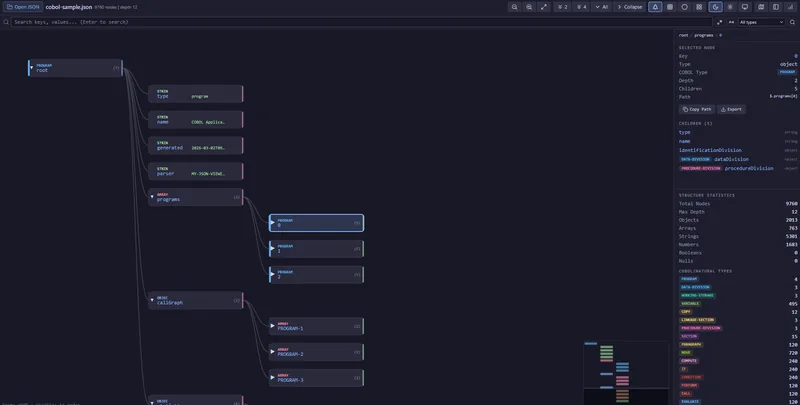
JSON Viewer
GitHub

JSON Viewer

Free, open-source JSON visualizer — no limits, zero dependencies, everything in a single HTML file.

HTML JavaScript Open Source
USISA Project
GitHub

USISA Project

End-to-end data science project for USISA — data analysis, modeling, and actionable business insights.

Python Pandas ML
Alzheimer Classification
GitHub

Alzheimer Image Classification

Deep learning model using TensorFlow for classifying Alzheimer's disease from brain MRI scans.

TensorFlow CNN Medical AI
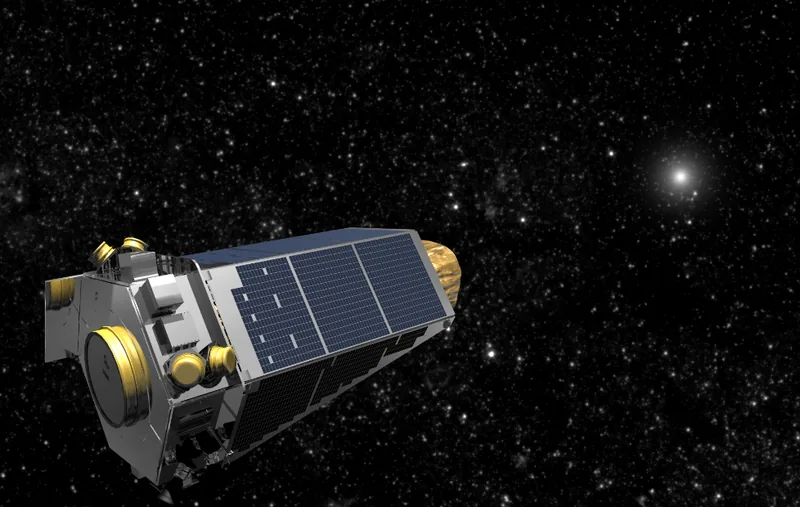
Exoplanets Kepler EDA
Kaggle

Exoplanets — Kepler EDA

Exploratory data analysis of NASA Kepler mission data to discover patterns in exoplanet detection.

EDA Visualization Astronomy
Cirrhosis Classification
Kaggle

Cirrhosis — Voting Classifier & XGB

Ensemble methods combining Voting Classifier with XGBoost for liver cirrhosis stage prediction.

XGBoost Ensemble Healthcare
Visit My YouTube Channel View All Projects on GitHub

Blog Posts

Detailed write-ups about my projects, learnings and experiments

JSON Viewer

JSON Viewer — Free, Open-Source, Zero Limits, One File

I built a JSON visualizer that does one thing and does it well: turn raw JSON into a clean, collapsible, color-coded tree view. No sign-ups, no file size limits, no server uploads — everything runs 100% client-side in a single HTML file.

The tool supports drag & drop, paste, and file upload. It validates JSON on the fly, highlights syntax errors, and lets you expand/collapse nested objects with a click. Perfect for developers who just want to quickly inspect an API response or debug a config file without pasting sensitive data into some random website. Completely free and open source.

View on GitHub
Alzheimer Classification with TensorFlow

Classifying Alzheimer's from Brain MRI Scans with CNNs

In this project I built a Convolutional Neural Network using TensorFlow and Keras to classify different stages of Alzheimer's disease from brain MRI scans. The dataset came from Kaggle and contains thousands of labeled images across 4 categories: Non-Demented, Very Mild Demented, Mild Demented, and Moderate Demented.

The model uses transfer learning with a pre-trained architecture, data augmentation to prevent overfitting, and achieves over 90% accuracy on the test set. This was one of the most meaningful projects I worked on because of its potential impact in healthcare diagnostics.

View on GitHub
USISA Data Science Project

End-to-End Data Science for USISA: From Raw Data to Business Insights

This was my capstone project where I collaborated with USISA, a real company, to apply the full data science pipeline. Starting from raw, messy datasets I performed extensive data wrangling, exploratory analysis, feature engineering, and predictive modeling.

The final deliverable included interactive visualizations, a predictive model for key business metrics, and a presentation with actionable recommendations for the company. This project taught me how to translate technical findings into business value — something that I believe separates good data scientists from great ones.

View on GitHub
Kepler Exoplanets EDA

Exploring the Cosmos: Exoplanet Discovery with Kepler Data

Using NASA's Kepler mission dataset, I performed a deep exploratory data analysis to understand the characteristics of confirmed exoplanets and candidate objects. The analysis covers orbital periods, planetary radius distributions, stellar properties, and the relationship between host star characteristics and planet detection.

Built rich interactive visualizations with Plotly and Seaborn to make the findings accessible and engaging. Published as a Kaggle notebook, this project blends my passion for data science with my curiosity about the universe.

View on Kaggle Watch Video